Before we begin our cross-dressing, x-mas/New Year celebration...let's read Shakespeare's Twelfth Night.
Monday, December 21, 2020
Twelfth Night - Acts 1 & 2
Before we begin our cross-dressing, x-mas/New Year celebration...let's read Shakespeare's Twelfth Night.

Sunday, November 22, 2020
Wednesday, November 4, 2020
Driving Miss Daisy
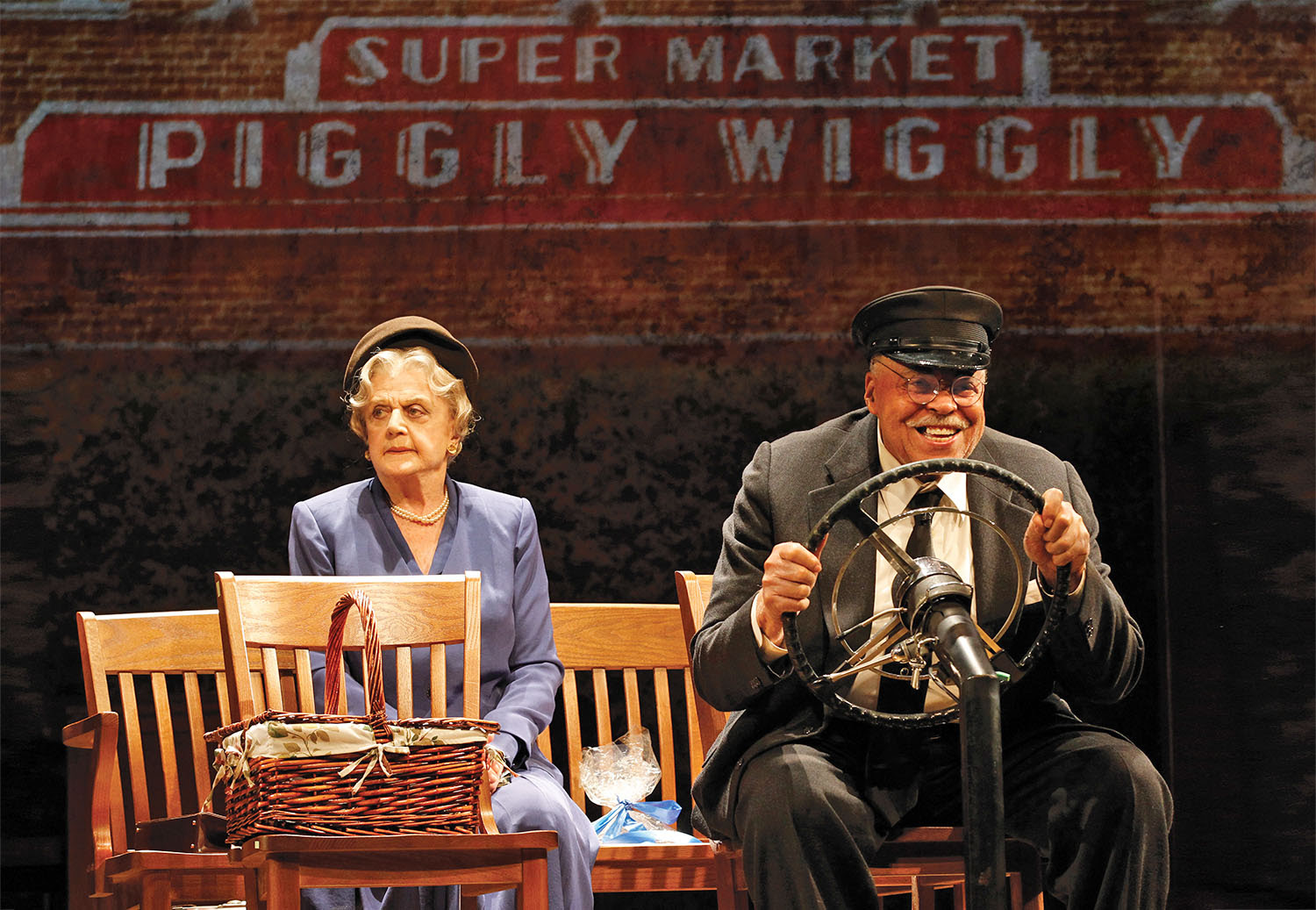
Driving Miss Daisy by Alfred Uhry.
As we read Driving Miss Daisy, everyone sign up for one of the 3 roles in the play. I'll be switching up readers as we go.
As we read, pay close attention to the role of the dynamic triangle: 3 characters in conflict.
New Vocabulary:
There are two types of sets a playwright can prepare a script for:
A suggested set (like the set used in Driving Miss Daisy) allows actors to create the setting through actions (like pretending to drive a car--which would be impractical in a theater) or through dialogue. Setting is described, not built. We use our imagination. Ah, the power of words...
As we read Driving Miss Daisy, everyone sign up for one of the 3 roles in the play. I'll be switching up readers as we go.
As we read, pay close attention to the role of the dynamic triangle: 3 characters in conflict.
New Vocabulary:
There are two types of sets a playwright can prepare a script for:
A. a realistic setA realistic set (like the set used in 'Night Mother) is a standard, realistic set that looks and feels like the actual setting of the play. It is more detailed and infinitely more expensive. Characters interact with props, costumes, and set pieces. It is not practical to change the setting or location in a realistic set.
B. a suggested set
A suggested set (like the set used in Driving Miss Daisy) allows actors to create the setting through actions (like pretending to drive a car--which would be impractical in a theater) or through dialogue. Setting is described, not built. We use our imagination. Ah, the power of words...
Wednesday, October 14, 2020
All About Characters
Characters are the driving force of a play. Without well designed and depicted characters, a play will certainly fall short. There are some types of characters we want to be intimately familiar with (so that they are 'cast' in our plays):
- A. Dynamic characters: characters that change through the events of the play or story.
- B. Round characters: characters that are fully developed. They often have contradictory traits. A loving uncle, but a pedophile (How I Learned to Drive), or a wise chauffeur who is illiterate (Driving Miss Daisy), or a cranky old Jewish lady who has a heart of gold (Driving Miss Daisy), a bitter couple who actually love one another, despite their bickering (Who's Afraid of Virginia Woolf), etc. These characters are interesting because they possess contradictory or conflictual traits or qualities.
- C. Confidante: someone in whom a character can confide or speak his/her mind freely.
- D. Sympathetic character: a character with whom an audience can identify.
- E. Unsympathetic character: a character with whom an audience cannot identify. Usually, this character has motives that are questionable, unappealing, or difficult to understand.
- F: Foil: a character who enhances a quality or trait of a major character or protagonist through contrast.
- G. Ally: a character who helps the protagonist accomplish, achieve, or learn something.
- H: Herald/Messenger: Usually a minor character, although not always--this character delivers an important message or brings some sort of external insight to the protagonist.
- I. Minor characters: stock characters, spear-carriers, static, flat, cardboard cut-out, stereotype, supporting, allegorical, etc.
How do I develop a character?
1. Know what role the character plays in your play/story.
2. Use characterization: what a character says, what a character says about another character, actions, thoughts, or description. Description is best delivered through dialogue in plays. In fiction, it is delivered by description and imagery.
3. Provide backstory through flashbacks (fiction), or monologues (plays)
Your Task: List 5-10 characters quickly (name (at least) + occupation or an identifying label or two that describes them...)
Ex. Booth: A hotheaded, unemployed man who allows his older brother, Lincoln, to stay in his apartment. Booth is obsessed with making money and attracting women, though he has neither a job nor a healthy romantic relationship.
Ex. Camae, a maid at the Lorraine Motel who meets and comforts King during what will come to be his last night on earth before his assassination. [Her name is derived from Katori Hall’s mother, Carrie Mae, who stayed home from King’s “I’ve Been to the Mountaintop” speech at the Memphis Sanitation Strike due to bomb threats, and regretted that missed encounter for the rest of her life.]
Ex. Miggy: a 9-year-old Hispanic boy; an energetic, goofy or playful nerd/misfit who is giving a school presentation to his class about his dysfunctional family.
After you have a list of 5-10 characters, choose 3-5 of these characters from your list who might be major characters--characters with whom you might be able to follow their story. The other characters should be labeled "minor" characters or fulfill any of the character types listed above. They might be foils or supporting characters, etc. in a setting or location.
For your major characters, give each one a story goal: this desire or need or character OBJECTIVE should be what makes the character active or willing to cause things to happen. Most character objectives are behavioral. They reflect a desire to affect or change another character's status, life, or circumstance.
We might classify character objectives as one of four types:
1. to make other characters feel good
2. to make other characters feel bad
3. to find out something important from another character
4. to persuade or convince another character of something important
All scenes develop conflict based on a character's objective. The only exception to this is the monologue, which is primarily used to provide backstory, exposition, or character development.
Turn in your notes for participation credit. We will use these later in future writing exercises.
The Second Character
The second character (an innovation created by Greek playwright Aeschylus) increases the dramatic possibilities of a story. Sometimes this second character compliments or highlights characteristics of the first character (a foil), othertimes, the second character creates a problem or conflict for the other character(s) in a play. In any case, most plays include at least two characters. [A play that only has one character is called a monodrama.]
Read the play Topdog-Underdog by contemporary playwright Suzan-Lori Parks. As you read, examine the relationships between the 2 characters and explain how CONFLICT between the 2 characters presents itself within the script. Answer all parts of the following in your response:
1. Person v. Person: Note that major characters in plays often are protagonists, but may also be the antagonists to the other character(s). Explain how this works in this play. How is Booth and Lincoln both protagonist and antagonist?
2. Person v. Self: Choose either Booth or Lincoln. Explain how this character struggles with a personal choice or action (present or past). Identify where this inner struggle occurs in the script and how the character resolves (or tries to resolve) this conflict.
3. Person v. Nature or Society: Choose either Booth or Lincoln and explain how this character struggles against nature or society. Nature can be human nature, as well as natural phenomenon. Society can be rules, laws, or the larger community in which the characters live.
4. How does the resolution of conflict relate to the play's theme? What are we to learn about ourselves, other people, society, or human nature from reading this play?
Then, let's look at two more plays that use only 2 characters.
The Loveliest Afternoon of the Year by John Guare is a short one-act absurd comedy.
Oleanna by David Mamet is a suspenseful drama about sexual harassment and power.
In both plays, there are only 2 characters. Since humans have been telling stories, a thing and its opposite--a dichotomy--has been used to create conflict between opposing forces. In writing plays, one character often acts as a protagonist, while another character supports the role of antagonist. The best drama occurs when these two forces are equal strength--since the outcome of such differences or battles of ideology is always uncertain. Even when the antagonist or opposing force is not on stage, this battle is a necessary element in good playwriting.
2-character plays allow for a more intense development of character (you're not wasting your writing energy on characters that are incidental or unnecessary), they're often cheaper to produce (only 2 actors are generally needed), and they allow for a more intimate experience for the audience (a small cast does not need a lot of space to move around in...removing the need for a complicated or costly set, costumes, or other technical aspects.) They often allow us to focus on the drama of a situation.
As you read each play, complete 2 (TWO!) comparison/contrast sheets.
You will complete 1 comparison/contrast graphic organizer for The Loveliest Afternoon of the Year, and you will also complete 1 comparison/contrast graphic organizer for Oleanna.
Compare/contrast He & She from The Loveliest Afternoon of the Year and compare/contrast John & Carol from Oleanna.
When comparing these two characters look for similarities (how the characters are foils to each other) and how they are different (how the characters differ or act as antagonist to the other character).
You will need to either print the attached compare/contrast form and fill it out, or simply answer the compare/contrast information in a Google Doc that you can submit for your assignment. If printing, you can take a screenshot or picture of your notes after you write them and send that, or scan and attach the graphic organizer with your answer. You may also create a form or slide presentation if you prefer.
Wednesday, September 30, 2020
Theater Vocabulary & Collaborative Play Workshops
This morning, let's take a look at some important theater vocabulary. It's important that we share these words as we attempt to craft our scriptwriting skills so that everyone knows what we're referring to. Please take notes on the terms you DON'T know.
After our sharing of our collaborative plays, we'll begin to examine "The Mountaintop" by Katori Hall. You can read more about Katori Hall at her website. If you haven't done so yet, please complete "The Mountaintop" and your play analysis for homework.
Here are some highlights from the Broadway production starring Angela Basset and Samuel L. Jackson.
Please turn in and submit your collaborative play project draft by next class.
Also, read this article about the play: "Katori Hall Expresses Rage Over Revisionist Casting of the The Mountaintop" so we can discuss it Monday.
Wednesday, September 23, 2020
The Colored Museum Collaborative Play Project; Introduction to The Mountaintop
This morning, please take the first 40 minutes to gather in your collaborative writing groups to do the following:
1. Share your monologue, song, or scene draft with your group members. 2. Get feedback from your peers about what's working or what needs or could be fixed to strengthen your piece.To strengthen your writing try looking for the following:
--Is it clear (without stage directions telling us) where the scene takes place? Consider how props, sound effects, or lighting effects can be used to hint at where a character is, but the major way to indicate this is by having the character refer to his/her environment or setting!--Is it clear (without stage directions) what is going on in the scene?--Do we get a sense of the character's personality through the word choice or diction of the character?--Is there conflict? Is something at stake for the character? Does the character have a clear goal or motivation to speak?--Avoid using vague language. Try to change nouns into specific nouns and verbs into action verbs.--Consider what the actor's physicality is contributing to the scene or monologue.--Is the point of the scene clear? Is the character vivid and interesting?
3. Edit and revise your writing.
4. Title your scene or monologue (see The Colored Museum as an example--each scene has its own name...); record your first and last name AFTER the title.
5. Then, together, decide on a working title for your collaborative script project.
6. Copy and paste your revised and workshopped work into one of the two documents below. Edit and rearrange your group's document text in the order you would want the play to be seen. We will share these scripts with the whole class next week!
We will begin reading The Mountaintop together after our workshop.
Your collaborative play project will be due next week--but make sure it's still in the right order and that you spend your time workshopping during class.
 Please finish reading this play (see the PDF copy of the play in the attachments on Google Classrooms) and complete the play analysis form for Thursday, October 1.
Drama means conflict. Without conflict, a play or story gets pretty boring. One thing that sets plays apart from other genres is this key difference. Again, drama means conflict! In the structure of the play, the conflict can come from any of the typical sources: person versus person, person versus self, person versus society, person versus nature...and sometimes person versus fate or god.
In order to create and sustain conflict in our plays, we usually have two important character types: The protagonist and the antagonist. In plays or dramas, the protagonist often acts as the antagonist to the other character. The antagonist is, therefore, also a protagonist. This dramatic duo is necessary for plays to retain their dramatic conflict. Many plays are written with just two main characters. We're going to look at some of them and examine how the writers use this 2-actor play structure to write really excellent plays.
Let's see it in practice!
Plays are written to examine or debate an issue or problem in our societies, communities, nations, etc. They allow us to experience the human struggle of our characters in conflict.
After our workshop, we will begin reading The Mountaintop by contemporary playwright Katori Hall.

Subscribe to:
Posts (Atom)
The Murky Middle (Even More Advice)
Aristotle wrote that stories should have a beginning, middle, and end. Middles can be difficult. You might have a smashing opening to a stor...